
Sea Turtles and Tradition in the Pacific Islands
By Cristian “CJ” Cayanan, Alexander R. Gaos, Danny Akaka, Camryn D. Allen, Yolarnie Amepou, Jennifer A. Cruce Horeg, Eric Cruz, Carey Demapan, Addie R. Q. Ferguson, Brittany Finucci, Pablo A. Fuenzalida-Miralles, Dan A. Godoy, Jessy Hapdei, Shaya Honarvar, Bryant Jeffery Zebedy, Eugene Joseph, Nina Karen Pauruwahine Raharuhi, Irene K. Kelly, Cheryl S. King, Piʻi Laeha, Alphina Liusamoa, Kelera Macedru, Alison J. Meeth, Alexi B. Meltel, Maria Petelo-Apulo, Susanna Piovano, Shritika S. Prakash, Enjoy Rain, Tyffen C. Read, Vagi Rei, Rebecca Rugaveuga Gima, Trenton Skilling, Ethan Souza, Marylou K. Staman, Josefa B. Muñoz
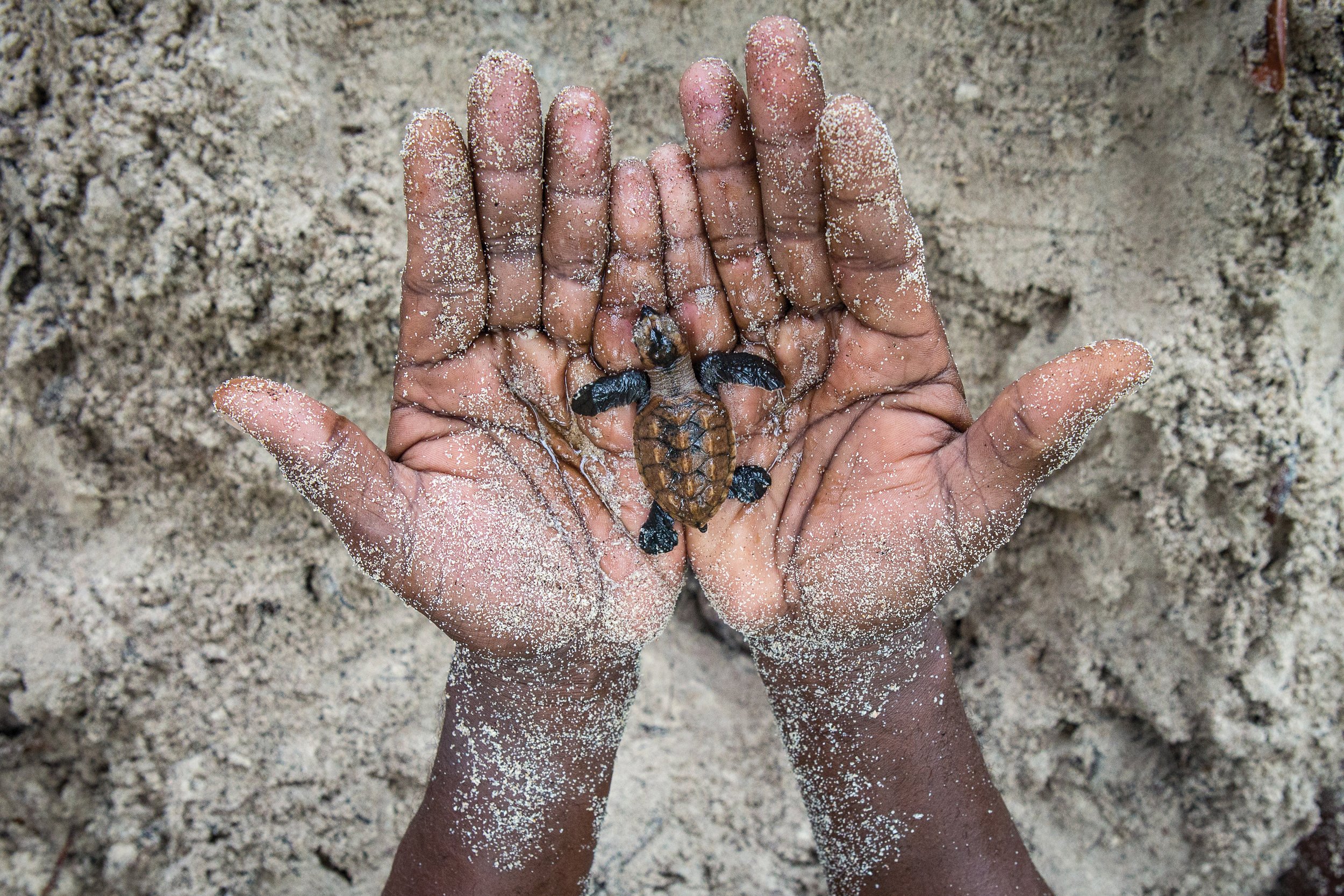
A local community member holds a hatchling hawksbill turtle in the Arnavon Islands, Solomon Islands. Once heavily exploited, these islands are a rare example of recovery through long-term comanaged conservation that combines community leadership with sustained external technical, institutional, and financial support, and government involvement. © Tim Calver Photography
Extending across nearly one-third of the Earth’s surface, the Pacific Islands region is a vast assemblage of atolls, islands, and archipelagos connected by ocean processes and human history. These islands sustain unique cultures and people whose identities are inseparable from the sea. For them, sea turtles are more than wildlife; they are kin, ancestors, and symbols of resilience and longevity. Turtles were once an important food source throughout the Pacific, and in some nations, they still are. In many Pacific Island cultures, turtles are consumed as part of age-old traditional practices that are alive today. Turtle shells adorn ceremonial regalia, turtles’ journeys mirror those of voyaging peoples, and turtle protection is woven into local law and community stewardship.
Ecologically, the Pacific Islands region sits at the crossroads of the tropical Pacific, where warm waters and coral archipelagos provide essential nesting habitats and foraging grounds for five sea turtle species: green turtles, hawksbills, olive ridleys, leatherbacks, and loggerheads. Each species is represented by one or more regional management units (RMUs), subpopulations defined by geography, genetics, and behavior that help guide conservation at meaningful scales. The International Union for Conservation of Nature (IUCN) rankings of these RMUs reflect a range of conservation status rankings from least concern (Central North Pacific greens) to critically endangered (Western Pacific leatherbacks).
Sea turtle management in this region requires a delicate balance between traditional authority and modern conservation frameworks. Customary harvest restrictions and cultural taboos are often complemented by national laws and international agreements grounded in Western science. Island communities and conservation practitioners face shared challenges: remote and often inaccessible nesting beaches; limited funding and institutional or enforcement capacity; and pressures from fisheries bycatch, climate change, and coastal habitat loss. The Pacific Islands are also among the world’s most vulnerable areas to climate change. Rising sea levels threaten the very habitability of entire islands, forcing some communities to relocate, while warming sand temperatures and intensifying storms jeopardize the integrity of nesting beaches, as well as hatchling survival and natural sex ratios.
Despite these pressures, some green turtle populations— particularly in parts of Polynesia—show stable or increasing trends following decades of protection. Many hawksbill populations remain endangered, yet commercial harvest has largely ceased, and the species is the focus of monitoring and recovery programs in many nations. Olive ridley populations also have stabilized after long-term declines, a result of sustained conservation efforts. Leatherbacks and loggerheads, the most migratory of the Pacific turtles, continue to face major challenges but have become catalysts for international cooperation.
The following sections highlight cultural connections, ongoing research, and conservation efforts involving sea turtles across the Pacific, where a shared narrative emerges: one of deep cultural continuity, ecological interdependence, and an urgent call for cooperation. For Pacific peoples, sea turtles are not merely species to be conserved; they are living links between land and sea, between past and future. They embody worldviews, legends, and traditional knowledge that continue to guide a path toward a more resilient future for both turtles and the communities that honor them.
Pacific Islands Subregions
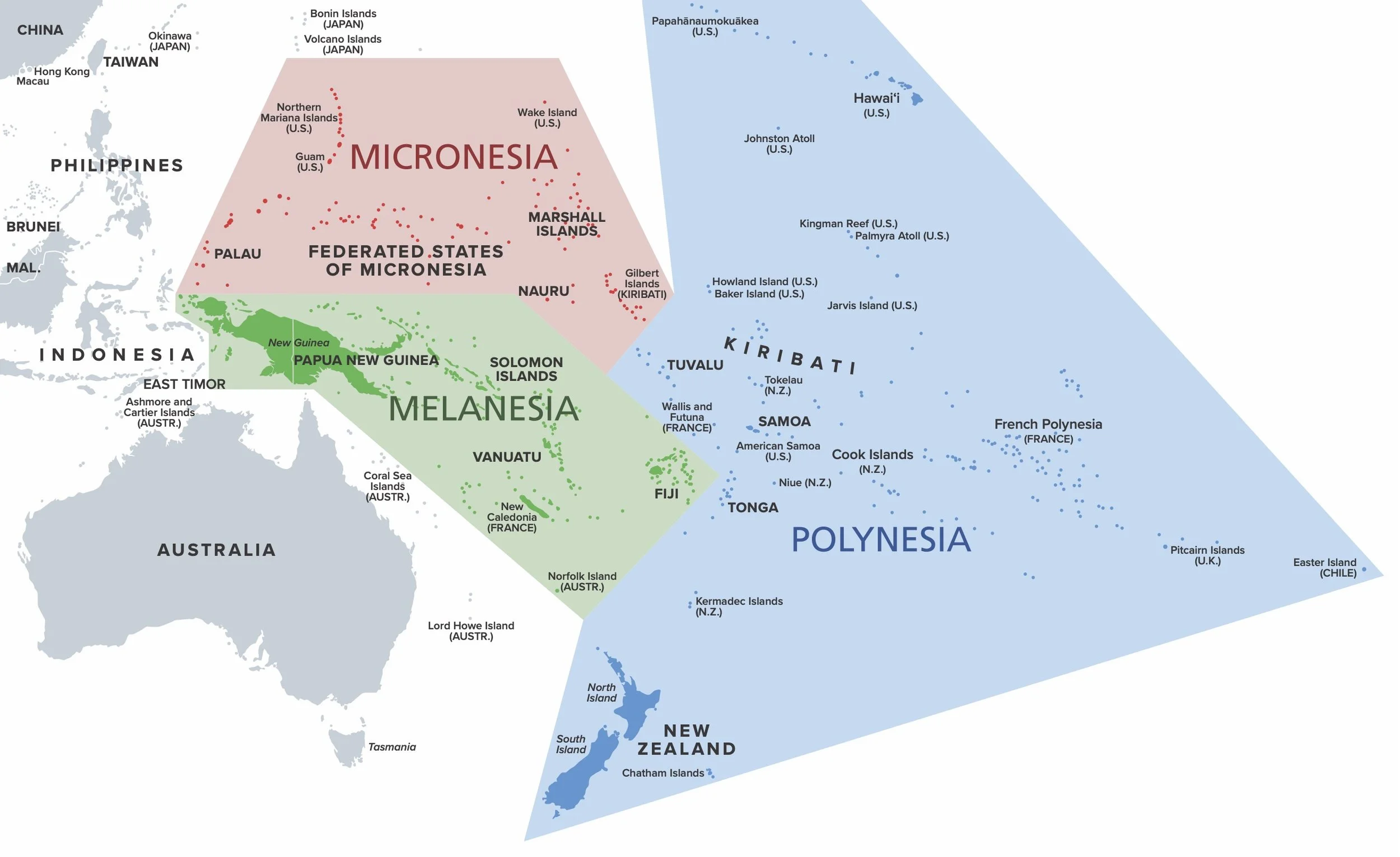
For the purposes of this article, the Pacific Islands region encompasses three subregions—Melanesia, Micronesia, and Polynesia—and the vast ocean that connects them. These island groups stretch from the Republic of Palau (Palau) in the west, to the northern remote islands of Hawaiʻi, to Easter Island (also known as Rapa Nui) to the east, and to the subtropical islands of New Zealand (or Aotearoa, as it is called by the Māori) to the south. These island groups’ combined exclusive economic zones cover tens of millions of square kilometers of ocean, an area larger than all the world’s landmasses combined, excluding Asia.
The Pacific Islands also reflect distinct ecological and conservation contexts: the richly biodiverse coral reefs of Melanesia; the small, low-lying atolls of Micronesia; and the widely scattered island chains of Polynesia. These subregions are not just geographic distinctions but also living cultural spheres with overlapping histories of language, migration, trade, colonialism, and stewardship. Understanding the cultural and ecological connections between Pacific Island peoples and sea turtles requires attention to enduring traditions, values of balance and reciprocity, and deep connections with land and sea.
This feature does not attempt to represent the full breadth of cultural diversity across the Pacific Islands. Instead, it highlights vignettes from each subregion that illustrate the relationships between Pacific peoples and sea turtles and the many ways conservation has long been practiced. Recognizing Indigenous systems of care and management reveals how connections to place, spirituality, and community continue to drive stewardship of sea turtles. It also demonstrates how integrating those values and traditional knowledge with modern conservation science offers the most meaningful path forward, one that strengthens both ecological outcomes and the cultural foundations that sustain them.
Melanesia
Stretching from the island of New Guinea to the archipelago of Fiji, Melanesia encompasses one of the most biologically and culturally diverse regions of the Pacific. It includes the island nations of Fiji, the Independent State of Papua New Guinea, the Solomon Islands, and Vanuatu, as well as New Caledonia (France), West Papua (Indonesia), and the Torres Strait Islands (Australia).
FIJI: From Sacred Resource to Protected Species
Located in the central South Pacific Ocean, Fiji consists of more than 330 islands that are home to indigenous iTaukei communities, where traditional knowledge and cultural values play a vital role in sea turtle management. Sea turtles (vonu in Fijian) are deeply embedded in customary practices, kinship ties, and spiritual beliefs.
In precolonial Fiji, vonu were regarded as sacred, and their harvest was strictly regulated by chiefs and select members of the gonedau (fishing clans) whose detailed knowledge of nesting and foraging areas was incorporated into traditional fishing calendars. Vonu capture followed strict protocols and taboos, and consumption of vonu was reserved for chiefs during certain ceremonies, and, on occasion, for warriors. For centuries, a deep respect for these cultural restrictions and spiritual beliefs—combined with restricted access to harvest—served as an effective safeguard against overexploitation.
When tortoiseshell entered Fiji’s cash economy in the 1840s, the sacred status of vonu began to erode, and the restrictions that had been in place were gradually replaced by the unregulated harvest of tortoiseshell and turtle meat and eggs for subsistence and commercial use—practices that continued for about a century. In 1941, the (then colonial) Fijian government introduced the first legal restrictions on vonu harvest under the Fisheries Act. Between 1997 and 2018, three separate moratoriums were enacted to prohibit the taking of vonu and their eggs. During that period, iTaukei could apply for special “exemption for traditional use” permits issued by the Ministry of Fisheries. Today, vonu are fully protected under Regulation 5 of the 2014 Offshore Fisheries Management Regulation and the Endangered and Protected Species Act of 2002.
In some Fijian villages where subsistence and limited local commercial use of vonu continues, chiefs remain the highest authority, and the gonedau only harvest the animals at their request. In other villages, iTaukei chiefs are embracing the protection of vonu by replacing vonu harvesting with cattle harvesting—demonstrating an adaptation of cultural traditions.
PAPUA NEW GUINEA: Where Kinship and Leatherback Survival Converge
For many coastal communities in Papua New Guinea (PNG), sea turtles (known to some communities as kiu) are kin, messengers, and guardians. Often, kiu are ancestral totems that cannot be eaten, reflecting an ethic of reciprocity that links food, culture, and stewardship. Elsewhere, kiu and their eggs are shared at communal feasts and marriages; for example, hawksbill shells are used as ornaments and ceremonial items. These uses are governed by social protocols of respect and responsibility, values that continue to guide resource use today.
Only leatherback turtles are legally protected under PNG’s Fauna (Protection and Control) Act of 1966, which prohibits their trade or possession. This protection is significant because PNG is a nesting stronghold for the Western Pacific leatherback along the Huon Coast of Morobe Province, where researchers have identified beaches of global importance. Conservation efforts there have been revitalized recently through community patrols, nest protection, and tagging programs. Similar efforts are now under way on New Britain Island, signaling renewed national commitment and local engagement in leatherback recovery in PNG.
Traditional authority and communal values remain at the heart of coastal life in PNG, and when combined with modern science, they chart the best path to sustaining sea turtle populations and cultural heritage.
SOLOMON ISLANDS: Hawksbill Recovery Through Comanaged Conservation
The Solomon Islands comprise nearly 1,000 islands in the southwestern Pacific, from large volcanic landmasses to tiny coral atolls. Sea turtles hold deep cultural and spiritual importance, and they have long featured in traditional feasts, ceremonies, and exchange systems. Historically, customary authority played an important role in shaping harvest practices, alongside periods of intensive exploitation that contributed to population declines. Today, turtle harvest is still permitted in most areas under national law.
Between the Isabel and Choiseul provinces, however, the Arnavon Islands stand apart as a protected sanctuary that supports the largest hawksbill nesting site in the South Pacific. Once heavily exploited, these islands are a rare example of recovery through long-term co-managed conservation combining community leadership with sustained external technical, institutional, and financial support, and government involvement. Through patrols, nest protection, and monitoring, hatchling success has dramatically increased and local stewardship has been strengthened. In recent years, women have taken larger leadership roles in these efforts, showing how traditional values of care and cooperation continue to evolve within modern conservation frameworks.
Similar locally driven initiatives across the Solomon Islands have integrated traditional ecological knowledge with collaborative management approaches to guide sustainable harvests, beach management, and hatchery work for other species, including leatherbacks.
Micronesia
Scattered over more than 6.7 million square kilometers (2.5 million square miles) of ocean, Micronesia is a constellation of more than 2,000 small islands and atolls that form an intricate seascape of linked cultures and species. The region includes the Federated States of Micronesia, the Republic of Kiribati, the Mariana Islands (Guam and the Commonwealth of the Northern Mariana Islands), the Marshall Islands, Nauru, and Palau.
FEDERATED STATES OF MICRONESIA: Chiefdom Systems Sustain Sea Turtles
The Federated States of Micronesia (FSM) is a nation of more than 600 islands across four culturally distinct states—Yap, Chuuk, Pohnpei, and Kosrae—each with its own languages, chiefdom system, and traditional form of governance. In the FSM, conservation practices and customary law vary widely, yet they share a common respect for the ocean and its living resources.
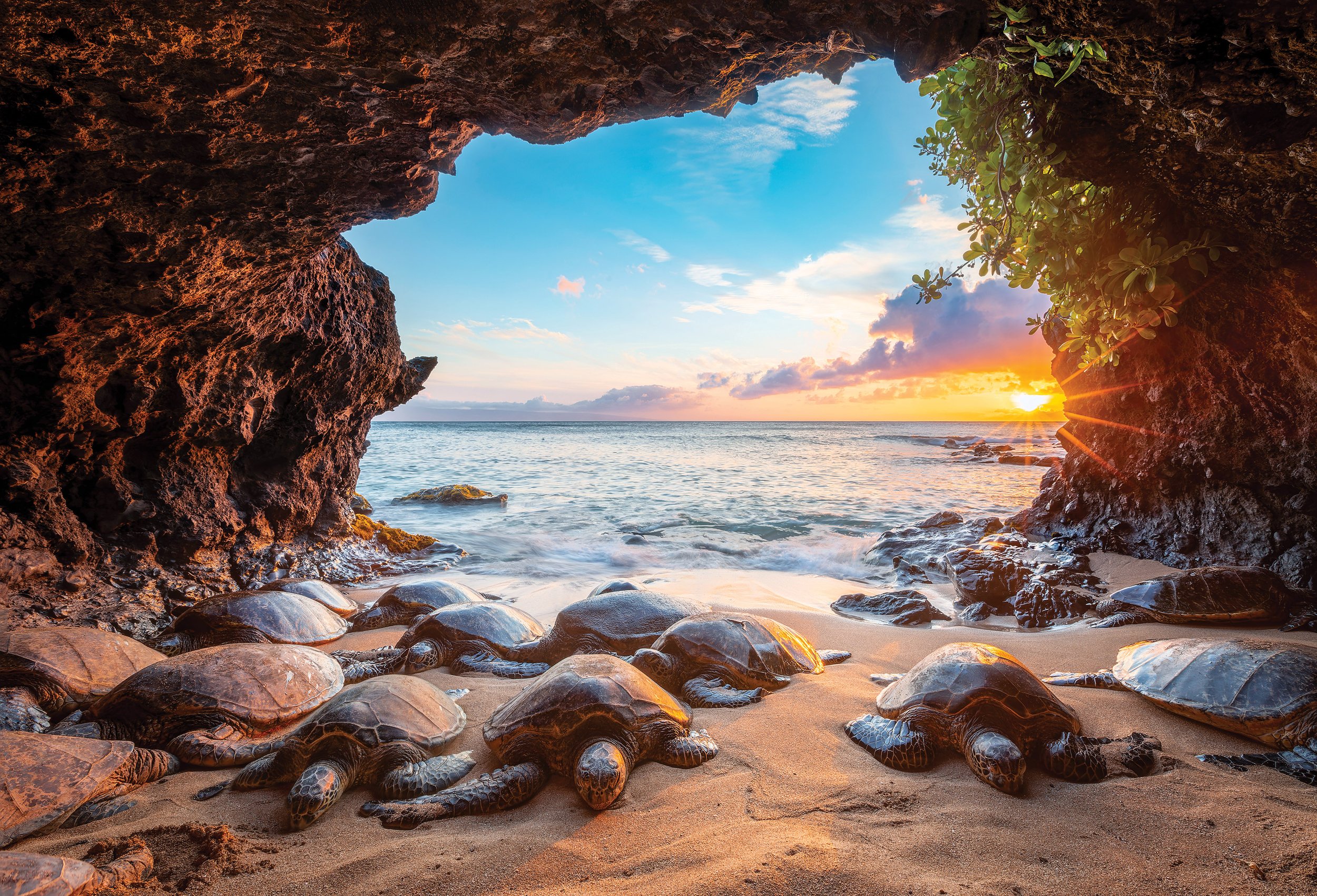
Green turtles (known locally as honu) rest in a cave on the coast of Maui, Hawaiʻi, U.S.A. © Leighton Lum
In Yap, Ulithi Atoll supports a large green turtle (wool) rookery, and the persistence of this population can be attributed to traditional governance that regulates ceremonial harvest and distribution. Elders determine when wool seasons open and close, and each turtle brought ashore is approved by a chief and then shared according to clan lineage and long-standing ritual. Harvesting wool without permission remains among the gravest of offenses, with entire islands being barred from using the ocean until offerings (bebel wuboth) are made to the highest chief. Bebel wuboth can include high-value local goods, such as hand-woven lavalavas and mats or hawksbill turtle (hoachoab) shells. These strict cultural controls continue to safeguard wool populations. And in recent decades, community-led monitoring, which has included the tagging of nesting females and the use of satellite tracking, has supported those safeguards and demonstrated how traditional and scientific measures can reinforce one another.
Sea turtles are deeply interwoven with community identity, social structure, and spirituality in the FSM. In Chuuk, certain parts of the turtle are offered to the chief who owns the land or reef where the turtle was captured, demonstrating how sea turtles are a symbol of respect toward people in power. Similarly, in Pohnpei, turtle meat is offered to the highest-ranking chiefs, the Nahnmwarki, who also have the right to confiscate a turtle and its eggs from fishers who do not provide an offering. Farther east in Kosrae, sea turtles (ngoe) are linked to Nosunsap, a powerful celestial guardian connected to the sea and the balance between humans and nature. Ngoe harvesting is prohibited in Nosunsap’s sacred taboo area (kuoip), thereby allowing populations to recover. These Micronesian customs reflect a shared ethic of restraint, reciprocity, and reverence toward nature that continues across the FSM today.
THE MARIANA ISLANDS: Reviving Culture After Centuries of Colonization
The Mariana Islands include the U.S. territories of Guam and the Commonwealth of the Northern Mariana Islands (CNMI), totaling 15 islands. The Indigenous peoples of the Marianas are known as CHamoru (in Guam) and Chamorro (in the CNMI). Green turtles are referred to as haggan betde, and hawksbills are referred to as haggan karai.
The CHamoru and Chamorro peoples traditionally used sea turtles in deeply symbolic and practical ways. Turtle shells were crafted into valued ornaments, known as ålas, that played a role in maintaining reciprocity and building social relationships. One highly esteemed type of ålas was guinahan famagu’on (children’s wealth), a necklace made of turtle shell discs that was given to an individual who saved a child’s life. Turtle shells represented gratitude and generosity, they were tokens of peace during conflict, and they were status symbols among high-ranking women. Turtle meat was reserved for celebratory feasts, and harvested animals were used entirely, reflecting a cultural ethic of respect and balance with nature.
Those traditions were profoundly transformed by centuries of colonization of Guam and the CNMI by Spain, the United States, Japan, and Germany, followed by U.S. militarization in both territories. These forces reshaped land use, language, and community structure, which resulted in an erosion of traditional practices tied to turtles and the ocean. Concurrently, these shifts made the Marianas an area of interest for intensive in-water sea turtle research—and that research has provided valuable insights into turtle foraging, health, and long-distance migrations.
Today, the expanding understanding of Mariana sea turtles mirrors a growing CHamoru and Chamorro cultural renaissance that is rekindling traditional language, navigational skills, healing practices, and ocean stewardship. This revival is reconnecting people to ancestral knowledge and reaffirming the bond between culture and conservation.
THE MARSHALL ISLANDS: Stewardship of Nesting Grounds Influenced by Legend and Ritual
The Marshall Islands consists of 29 atolls and five islands running northwest to southeast in two roughly parallel chains named Ralik and Ratak, which translate to “sunset” and “sunrise,” respectively.
Sea turtles are an important cultural resource to the Marshallese, as depicted in two legends. In one legend, Lijebake (the Great Mother Turtle) rescues her granddaughter from mistreatment in Kiribati and brings her to Jemo Island for refuge, which explains why turtles prefer to nest on Jemo Island. In another legend, the two sons of Lijebake visit her in Bikar (a favored nesting ground for turtles). She gives her obedient, appreciative son the higher-quality, upper portion of her shell to wear, thereby bestowing magical powers on him, and she gives her disobedient son the lower-quality, tail portion of the shell. This legend explains why the Marshallese value the neck plate of the carapace over the tail plate.
Until the mid-20th century, chiefs designated several islands and atolls as sea turtle reserves under the customary mo (taboo area) system. Strict rituals were required to take turtles from a protected area. Before gathering eggs and turtles, an iroij (chief) would conduct an opening ceremony that included chants, sacred offerings, and rituals. Then the iroij and senior people would lead the gathering of turtles and eggs in an organized manner: the iroij was the first to step on the island, followed by the other participants, all walking in strict silence in a single file so that only one set of footprints appeared on the sand.
PALAU: A Legacy of Tradition and Ocean Conservation
Palau (also known as Belau) is an island nation composed of more than 300 islands that are part of the westernmost Caroline Islands group, adjacent to the FSM in the east. In Palau, melob (green turtle) meat and eggs are a traditional and customary source of food. Historically, green turtle meat was reserved for chiefs or people of high status. In modern Palauan society, the only ceremony for which turtle meat is required is the confirmation of a new Ibedul, which is the paramount chief title for the State of Koror. During the ceremony, the new Ibedul must wash his hands in turtle blood in the village of Ngerchemai before traveling to the southern island of Peleliu to receive his title.
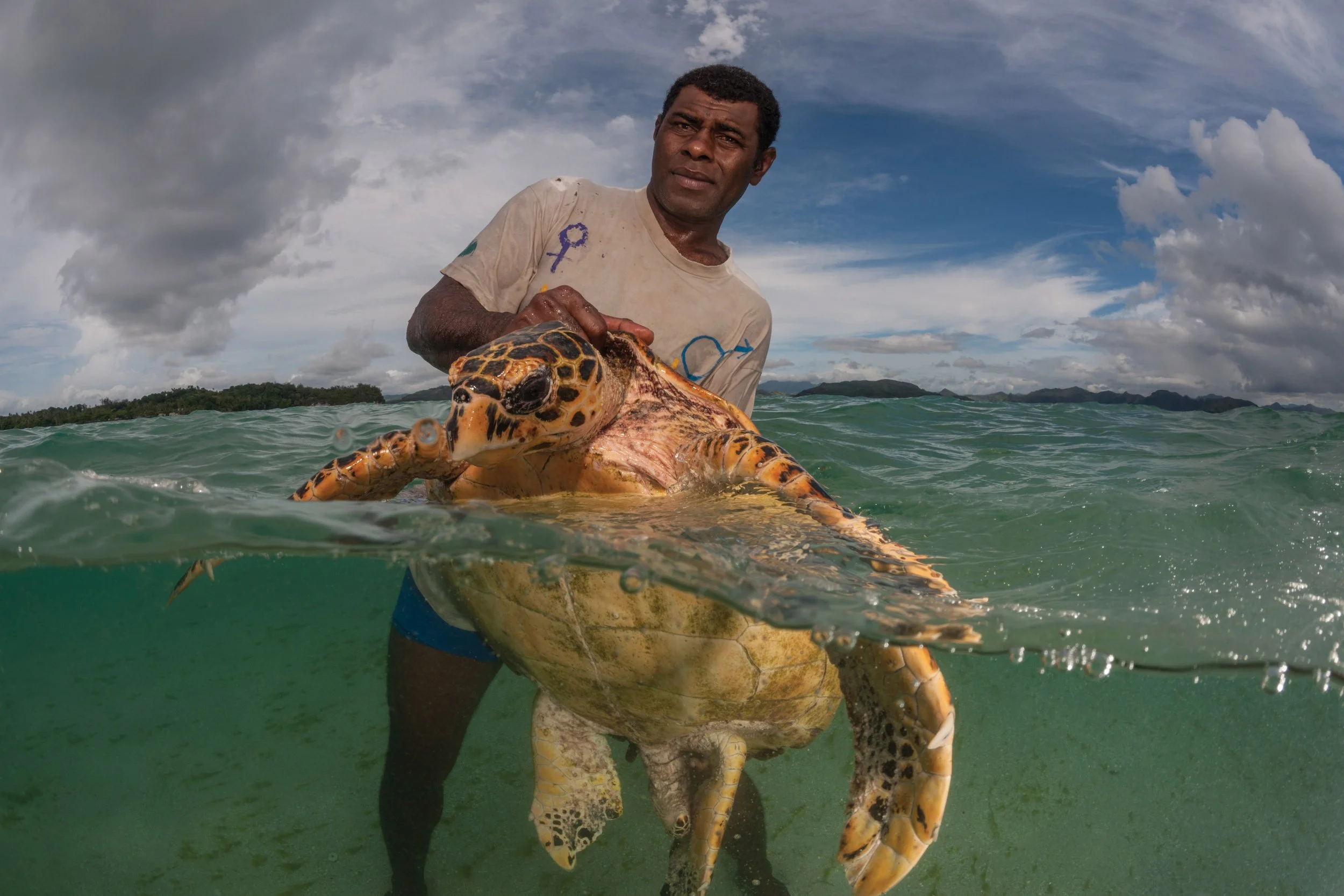
Emosi Time catches a hawksbill turtle to tag and release on Kavewa Island, Vanua Levu, Fiji. Sea turtles (vonu in Fijian) are deeply embedded in customary practices, kinship ties, and spiritual beliefs in Fiji. © Juergen Freund
Ngasech (hawksbill turtle) shells are used for jewelry, accessories, and toluk (money plates). Toluk are highly valued in Palauan culture, and their exchange strengthens ties between families and clans. Toluk are traditionally traded between families during life events such as births, marriages, and funerals. They are also exchanged between women as a form of compensation for various services. Because toluk have been in constant circulation within communities, they hold much historical significance. However, in recent interviews with Palauan women, some have shared that crafting new toluk is no longer necessary, both because hawksbills are declining in number and new toluk are less valuable than older pieces.
Palau’s reefs and beaches support one of the most significant remaining ngasech nesting populations in Micronesia. Ongoing monitoring has documented regular nesting activity and gradual signs of recovery following historic overharvest.
Melob also nest and forage extensively in Palauan waters. The melob population is protected by long-standing hunting closures that coincide with peak nesting periods (from May to August and December to January). Taking eggs or nesting females is prohibited, and captured turtles must meet minimum size requirements. Ngasech remain under year-round protection because of their still-vulnerable population.
Polynesia
Occupying a vast triangle—from Hawaiʻi (U.S.A.) in the north to Easter Island (Chile) in the southeast to New Zealand in the southwest—Polynesia covers the largest area of any Pacific subregion. Within this immense ocean expanse lie American Samoa; the Cook Islands; French Polynesia; Niue; Norfolk Island; the Pitcairn, Henderson, Ducie, and Oeno Islands (United Kingdom); Rotuma (Fiji); the Independent State of Samoa; Tokelau (New Zealand); the Kingdom of Tonga; Tuvalu; and the Territory of the Wallis and Futuna Islands (France).
THE HAWAIIAN ISLANDS: Successful Recovery of the Green Turtle
In the Central Pacific, the geographically isolated Hawaiian archipelago consists of eight main volcanic islands and several atolls and islets. To some Kānaka Maoli (Native Hawaiian) families, the honu (green turtle) and the honuʻea or ʻea (hawksbill turtle) are revered as ʻaumākua—spiritual guardians linking people and the sea. An example of sea turtles being regarded as a protective force is found in the moʻolelo (traditional story) of Kauila, which speaks of a turtle that could shift into the form of a girl and use her magic to protect children. Families that did not hold turtles as their ʻaumākua would occasionally harvest the animals for the meat, blood, and shell, which were used medicinally and in the creation of implements such as fishhooks. Some kūpuna (elders) note that the symbolic link between the honu and the honua (the world) is illustrated by the turtle’s shell because it carries the map of the islands, which mirrors the journeys of Polynesian voyagers who, like turtles, travel great distances but always find their way home.
In old Hawaiʻi, all natural resources were protected and managed by the kapu system, which regulated harvests and reinforced reciprocal respect for marine life. The kapu system enforced temporary restrictions (e.g., by region or time of year) on the harvest of specific resources that were informed by the cultural practice of kilo (observation over time). In this way, the management of resources, such as turtles, was often informed by the people who spent the most time interacting with those resources.
Following the commercialization of turtle harvesting from the late 19th century to the middle of the 20th century, populations of Hawaiʻi’s sea turtles declined sharply. However, since the introduction of protection measures in the late 1970s, the green turtle has made a remarkable recovery and now numbers in the thousands. In contrast, the honuʻea remains far rarer, though monitoring suggests slow, incremental increases in nesting activity. Most honu (green turtles) nest on the remote, low-lying atolls of Lalo (the French Frigate Shoals) in the northwestern Hawaiian Islands, where they face increasing threats from rising seas and coastal erosion. The impacts of climate change on this population remain uncertain, prompting both concern and caution as discussions continue on whether limited harvesting by Indigenous peoples could one day be reintroduced on the islands.
In the past, much of Hawaiʻi’s traditional ecological knowledge was suppressed through colonization and Western influence, but in recent decades, Kānaka Maoli and allies have worked to restore ancestral practices of care for the land and sea. Today, turtles in Hawaiʻi embody both cultural continuity and ecological renewal. The resilience of the honu and the gradual reemergence of the honuʻea reflect a broader recognition of how ancestral practices of observation and restraint align with modern conservation.
AMERICAN SAMOA AND THE INDEPENDENT STATE OF SAMOA: Shared Cultures
Situated in the mid-South Pacific, the Samoan archipelago consists of the U.S. territory of American Samoa to the east and Samoa to the west. American Samoa includes five inhabited volcanic islands—Tutuila, Aunuʻu, Ofu, Olosega, and Taʻū—alongside two uninhabited coral atolls called Swains Atoll and Rose Atoll. Samoa is primarily made up of two large inhabited volcanic islands—Upolu and Savaiʻi—and several smaller islets.
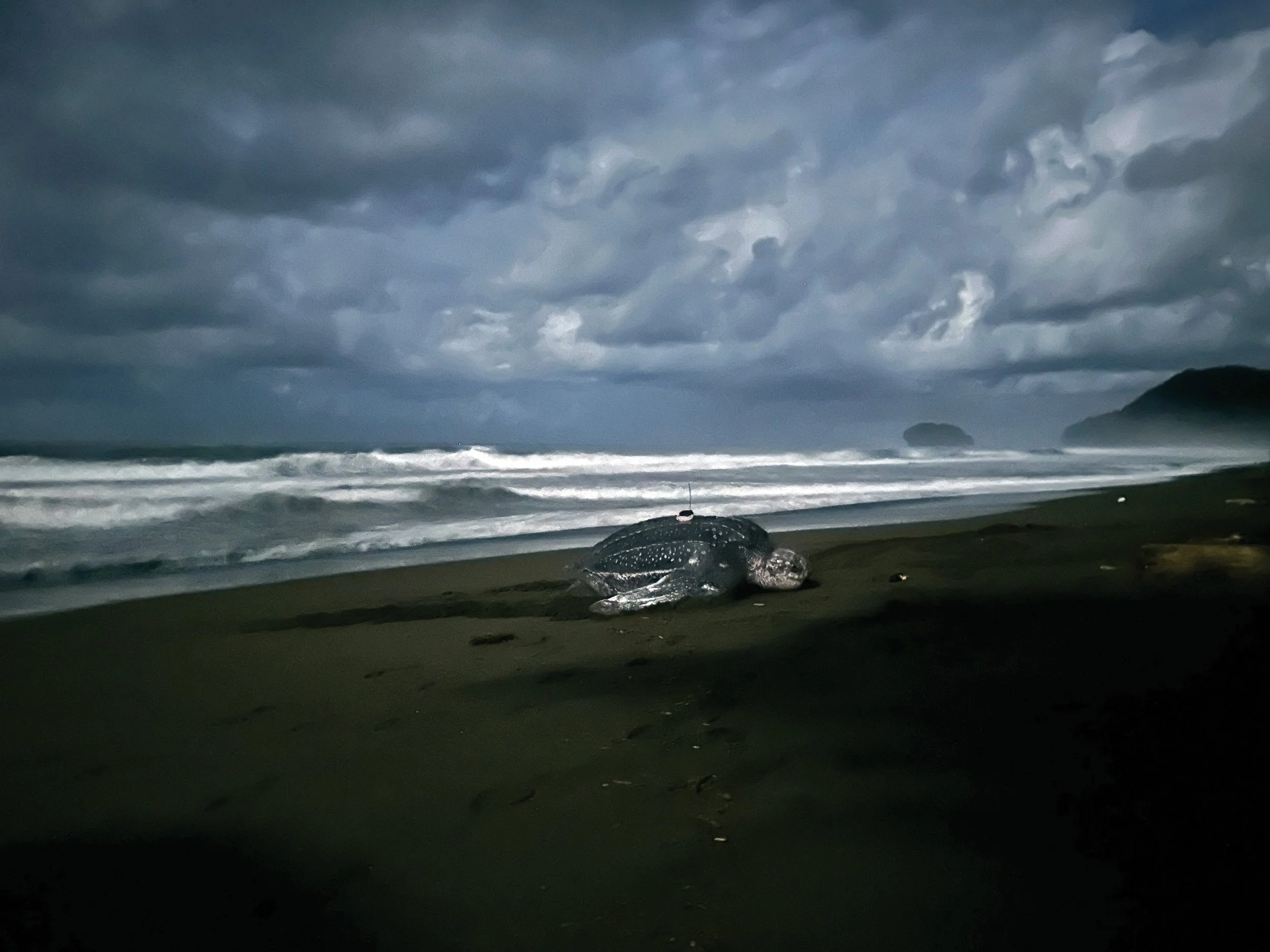
A leatherback turtle fitted with a satellite transmitter emerges under a full moon to nest on Haevo Beach, Isabel Island, Solomon Islands. Western Pacific leatherbacks, which are critically endangered, nest primarily in Indonesia, Papua New Guinea, and the Solomon Islands. © Alexander R. Gaos
American Samoa and Samoa share a deeply rooted cultural heritage known as Fa‘a-Samoa (the Samoan Way), and customs and cultural practices continue to guide community life and modern conservation. Historically, the laumei (sea turtle) use was governed by customary protocols that ensured sustainable and respectful practices. The matai (chief) system and fono (village council) determined when and how laumei could be taken, how laumei parts were to be shared, and the meat that was to be reserved for ceremonial occasions. Today, these community-based mechanisms embody a long-standing ethic of respect and restraint toward marine life and illustrate the enduring relationship between cultural governance and conservation. While traditional norms once limited turtle harvest to chiefly contexts, modern conservation laws in both Samoa and American Samoa now prohibit most forms of harvest and trade, reflecting a continuation of traditional values of reverence within contemporary conservation frameworks.
Laumei are also known as i‘a sā (sacred fish) and symbolize wisdom, protection, and connection to the sea; they appear in petroglyphs, material arts (e.g., ornaments and combs), and myths. One legend tells of the shark and the turtle that connect Samoa and American Samoa. In that legend, an old, blind woman and her daughter suffered through famine while living in Samoa. Unable to find food, they both jumped off a cliff into the ocean below, and their bodies transformed—one into a turtle and the other into a shark. They swam toward American Samoa, and on their arrival, they returned to their human forms and found food, thanks to a chief’s hospitality. The woman and her daughter were so appreciative that they promised to live just beyond the cliffs and to return when they were called by a song that they had gifted to the villagers. When a villager sings this song at the legendary site, it is believed that a turtle and a shark will appear. Myths such as these demonstrate the profound traditional ecological knowledge and oral stories that unite Samoan peoples and laumei.
NEW ZEALAND: Where Leatherbacks Feed and Marine Connections Endure
New Zealand (or Aotearoa) lies at the southwestern edge of the Polynesian Triangle, where warm tropical currents meet cooler temperate seas. Although honu (sea turtles) do not nest there, the surrounding waters are important seasonal foraging grounds for several species, including leatherbacks, greens, loggerheads, hawksbills, and olive ridleys, all of which are protected under the Wildlife Act of 1953. For the Māori, the Indigenous people of New Zealand, honu are part of a broader relationship they have with the ocean. Honu are seen as voyagers that traverse great distances, and they embody endurance, navigational prowess, and the connection between people and the sea. In te ao Māori (the Māori worldview), sea turtles symbolize the deep interdependence between all living things and the ocean.
Leatherback turtles are the most frequent visitors to New Zealand’s waters, and the region that extends from Northland to the Kermadec Islands is home to some of the highest concentrations of foraging leatherbacks in the western Pacific. Most leatherbacks originate from the western Pacific nesting population, though leatherbacks from the eastern Pacific can also be found feeding on the abundant jellyfish population in the highly productive waters of the region.
This same ocean productivity draws fisheries, especially longline operations in the north during the warmer months when leatherbacks are most abundant, resulting in bycatch rates that can exceed international recommendations. Efforts are under way to better document bycatch and to assess options for reducing impacts.
Looking to the Future
The Pacific Islands region represents a vast and culturally rich expanse where sea turtles are more than just marine species—they are sacred beings, cultural touchstones, and symbols of social and ecological balance. Indigenous communities in the region have long upheld systems of stewardship rooted in reciprocity, respect, and deep ecological knowledge; those systems are not relics but active practices that continue to guide conservation today. The strong cultural ties between sea turtles and Pacific Islanders will drive the recovery and persistence of turtle populations in this region now and in the future.
The cultural practices and success stories shared in this feature highlight the importance of recognizing and supporting Indigenous leadership in conservation as central to effective environmental governance. As global efforts to protect biodiversity increase, the people of the Pacific Islands offer invaluable lessons on how cultural heritage and ecological stewardship can be seamlessly interwoven. By honoring and amplifying Indigenous voices and traditions, we not only safeguard species such as sea turtles but also uphold the cultural integrity and resilience of Pacific Island communities. Conservation is not solely a scientific endeavor—it is also a cultural commitment, a spiritual duty, and a communal act of care that spans generations and oceans.
Maps: Sea Turtle Biogeography in the Pacific Islands
The maps below display available nesting and satellite telemetry data for sea turtles in the Pacific Islands. The data include 793 nesting sites and 512 satellite tags representing greens, hawksbills, leatherbacks, olive ridleys, and loggerheads. Data were compiled through a literature review and provided directly to SWOT by hundreds of data contributors. For metadata and information about data sources, see the data citations or visit the online version of the maps.
We are grateful to all of the data contributors and projects that participated in this effort.
Nesting Biogeography
Nesting sites are represented by dots colored by species and scaled according to their relative nesting abundance in the most recent year for which data are available. At sites where multiple species nest, data from all species were combined to form an abundance-scaled pie chart that indicates the proportion of each species nesting at that site. For uniformity, all types of nesting counts (e.g., number of nesting females, number of crawls) were converted to number of clutches as needed. Conversion factors ranged from 1.5 to 3.8 clutches per female and 0.58 to 0.81 crawls per clutch, depending on species.
Satellite Telemetry
The satellite telemetry map presents data from more than 500 green, leatherback, hawksbill, olive ridley, and loggerhead turtles and represents more than 508,000 animal locations. Only tracks from tags deployed on turtles originating in the Pacific Islands were included, thereby excluding some turtles that originate outside of the Pacific Islands but inhabit the region’s waters (most notably, North Pacific loggerheads, which originate in Japan). For more information on the mapping methodology, see the map’s legend.