
Editor's Note: Sustaining Our Momentum
By Roderic B. Mast
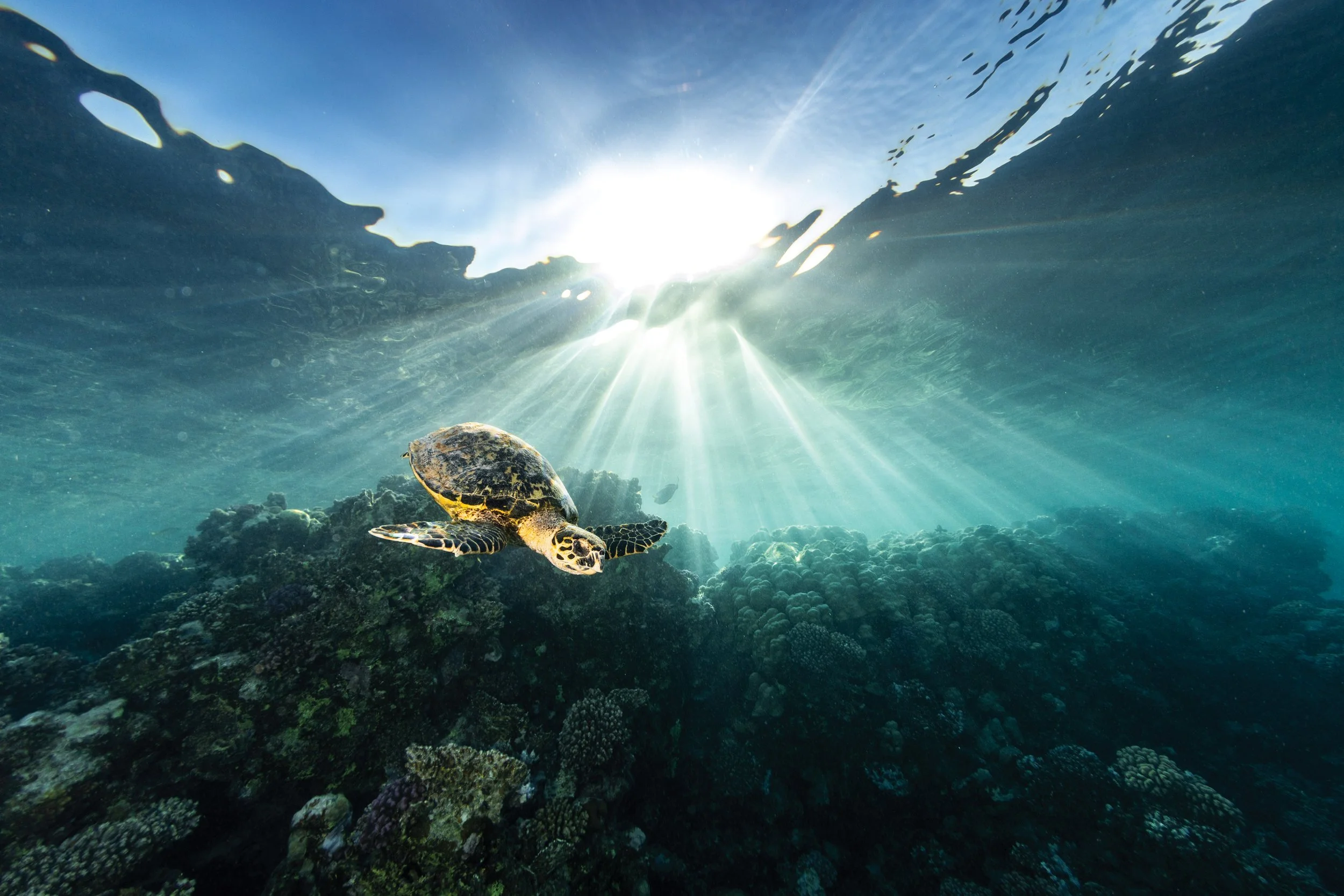
A hawksbill turtle glides above a coral reef in the Red Sea, Egypt. © Gina Goodman/@ginagoodman
The past year was an extraordinary one for global sea turtle conservation. The International Sea Turtle Society Symposium in Ghana deepened ties with African conservationists for the first time on their soil. The first Atlas of Global Sea Turtle Status (2025) capstoned two decades of expert consultations by the International Union for Conservation of Nature (IUCN) Marine Turtle Specialist Group, providing an in-depth roadmap for sea turtle research and conservation. Efforts to define “Important Marine Turtle Areas” were kick-started in Africa, launching a valuable new tool for local-scale conservation. And the green turtle’s global IUCN Red List status fell from Endangered to Least Concern, proof to the world that decades of concerted conservation effort can indeed pay off. There was even a new species of extinct leatherback discovered! Few species-centric collectives can boast such tangible successes. In many ways, our community is on a roll and can serve as a beacon of hope for biodiversity conservationists globally.
This contrasts starkly, however, with reports of the planet’s overall health. Ocean temperatures reached record highs with each passing month since 2024, fueling a coral bleaching trend that has now affected 84 percent of the world’s reefs. More than half of the world’s bird species are declining according to the IUCN, and many ice-dependent species are increasingly threatened. And while some multinational agreements to protect Nature inched ahead, like the United Nations (UN) High Seas Treaty, now ratified, others, like the UN global plastics treaty, remained in political deadlock, and the 2025 UN Climate Change Conference (COP30) yielded little progress toward addressing Earth’s greatest environmental threat.
Sadly, the U.S. government, once a major funder of international sea turtle research and conservation, abruptly canceled dozens of commitments in January 2025, leaving sea turtle projects and professionals worldwide in precarious positions, with little notice and few options. So how can our community handle this historic moment in which our conservation blueprint, experience, and know-how are at their zenith, yet systemic threats are on the rise, political will is stagnant, and government financing is dwindling?
The answer is to draw strength from our community, get creative about fundraising, stay optimistic in the face of adversity, and sustain our momentum. SWOT can help—especially with optimism and community—and we also hope to vastly expand our support for field projects. As one colleague said, concerning funding shortages, “It’s up to nonprofits and responsible rich people now.” And for better or worse, the world is replete with both, particularly the latter. Forbes Magazine estimates there are some 3,000 billionaires and an even larger population of multimillionaires. This concentration of wealth is coupled with a rise in philanthropic giving, now at record highs in the United States.
So let us find ways to channel our collective energy and to help each other reach these generous people and companies. And for those of us who may feel hopelessly cut off, call on your global SWOT Team colleagues for help and connections. Like sea turtles, turtle folk are hardy and resilient, experts at adapting to the vagaries of politics, culture, and human behavior. I trust that our ever-growing, ever-committed, and passionate community will rise to today’s challenges, take care of one another, and keep our important work focused and funded, all while keeping a weather eye on slowing the stubborn systemic threats to turtles, the biosphere, and humanity. Together we can bend the arc of history toward the positive and shape what the next era of conservation looks like.
This article originally appeared in SWOT Report, vol. 21 (2026). Download the full report as a PDF.