
FAQs About Sea Turtles: What Can Fossils Tell Us About Today’s Sea Turtles?
By Andrew Gentry
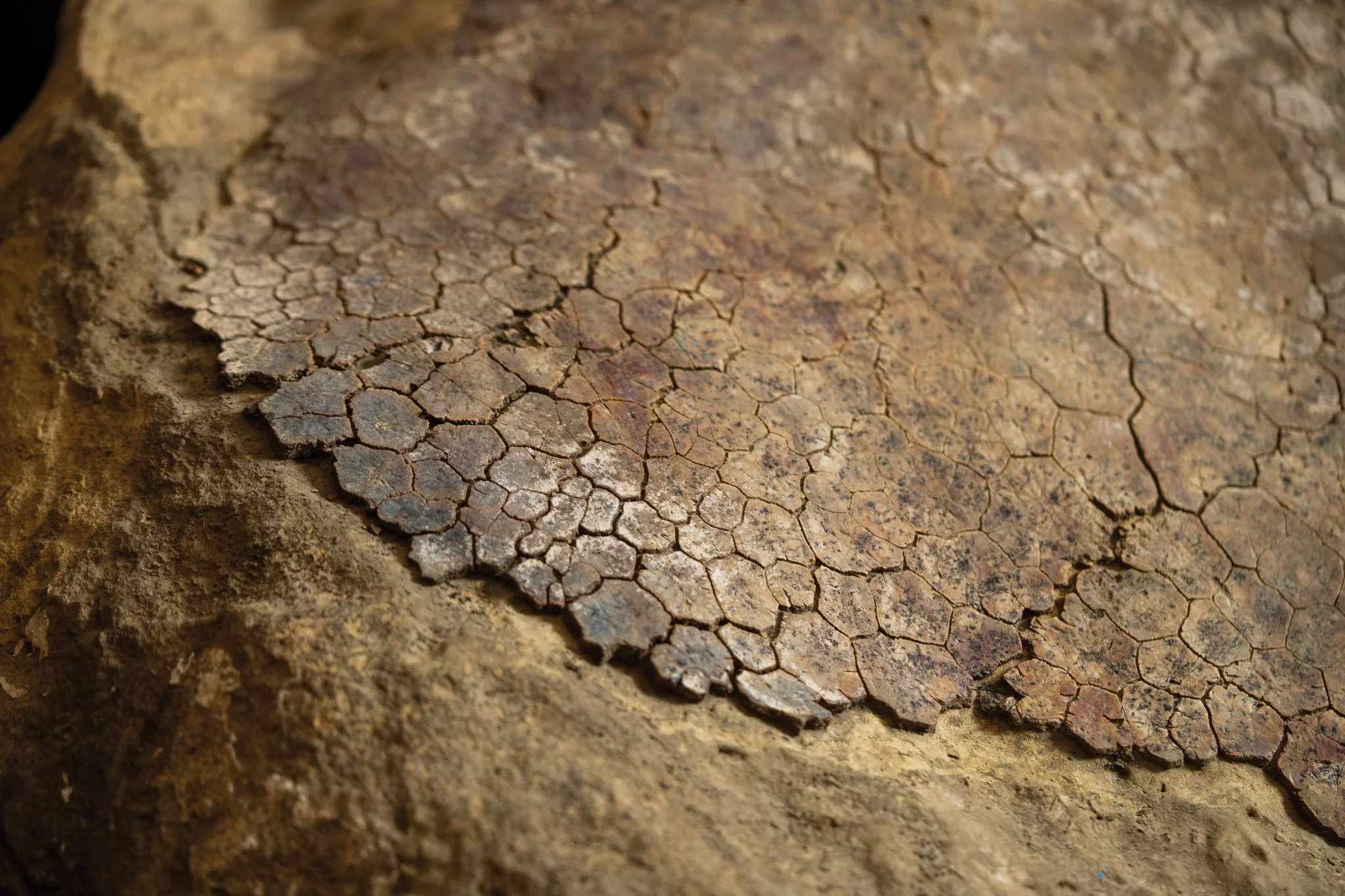
A preserved mosaic of bony ossicles makes up the fossilized shell of a newly discovered extinct leatherback turtle, Ueloca colemanorum. © Telegraph Creative
Sea turtles are among the most globally recognized and well studied of all the reptiles, yet their evolution remains a mystery. Recent studies show that many extinct species of marine-adapted turtles may not even be related to the sea turtles alive today. It appears, in fact, that disparate clades of turtles have independently evolved to live in the sea at different times, developing features such as paddle-like limbs and hydrodynamic shells. Determining which of these convergent evolutionary lineages gave rise to modern sea turtles has been the subject of rigorous scientific study for centuries.
The earliest fossil turtle widely considered to be adapted for marine life is Odontochelys semitestacea, a species that lived in shallow, nearshore habitats off the coast of China some 220 million years ago. While it lacked a complete shell and well-developed flippers, molecular studies of its fossil remains reveal isotope signatures nearly identical to the modern green turtle, indicating that Odontochelys likely fed on marine plants. Researchers have speculated that Odontochelys may have foraged on algae, much like a modern Galápagos marine iguana, using its claws to cling to submerged rocks.
Nearly 70 million years later, during the Late Jurassic, another group of turtles called thalassochelydians began to invade the marine realm in what is now western and central Europe. This diverse group also shows marine features such as reduced shells and enlarged salt glands, but, like Odontochelys, also lacked the rigid flippers required for life in the sea.
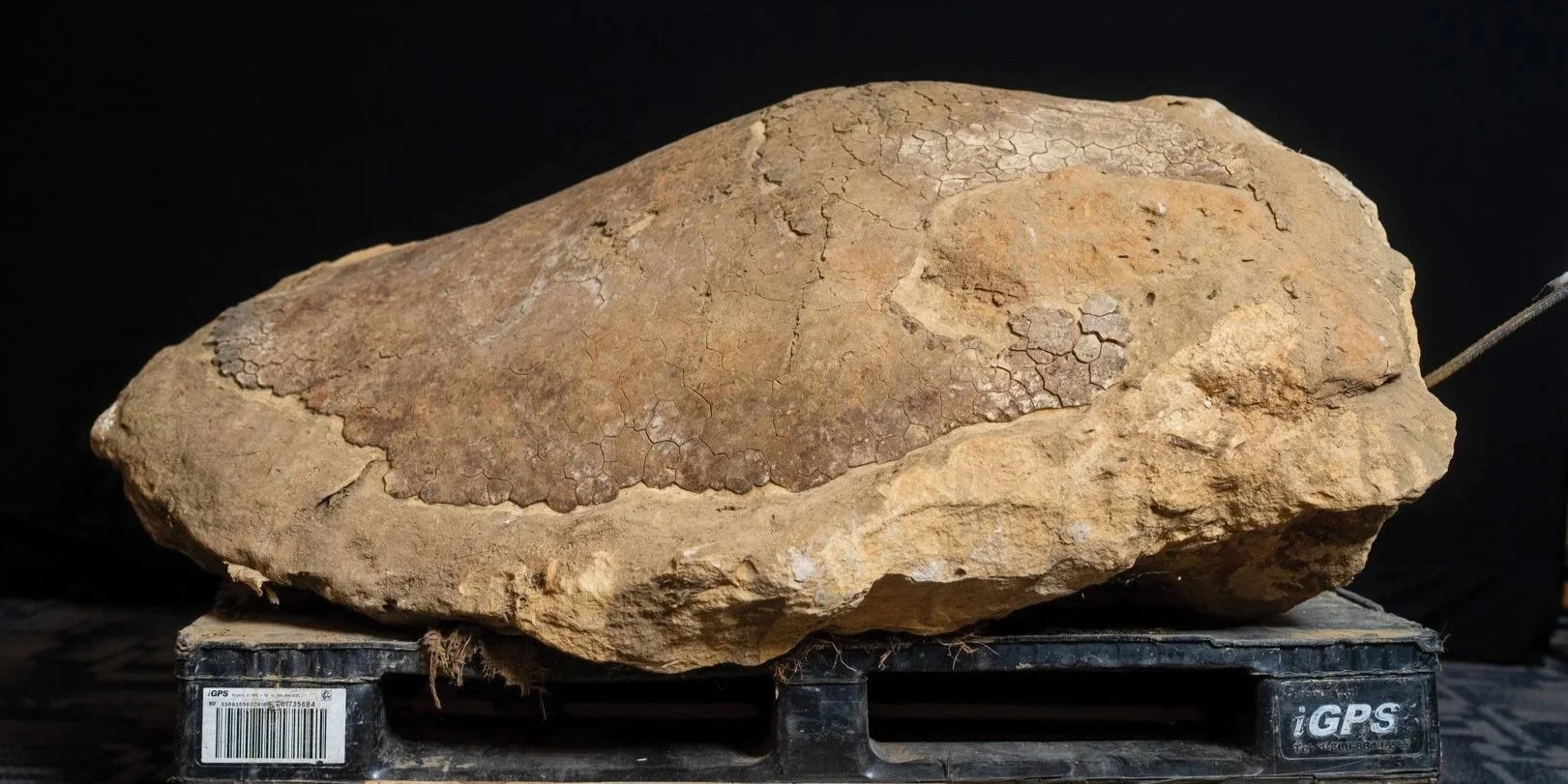
This fossilized shell of Ueloca colemanorum, a newly discovered extinct species of leatherback turtle, was found in Alabama, U.S.A. © Telegraph Creative
Toward the end of the Age of Dinosaurs, highly specialized marine forms known as protostegids appeared in the fossil record and quickly spread around the globe. This group includes the massive Archelon, which reached lengths of over 12 feet and weighed more than a ton. Although protostegids possessed many of the same marine adaptations as modern leatherbacks, there is no scientific consensus on their relatedness.
The global cataclysm 66 million years ago that ended the reign of dinosaurs also claimed protostegids; however, a separate lineage called chelonioids managed to survive the Cretaceous-Paleogene mass extinction. Over the course of millions of years, chelonioids evolved, spreading around the globe and diversifying into the iconic leatherback and hard-shelled sea turtle species we know today.
This article originally appeared in SWOT Report, vol. 21 (2026). Download the full report as a PDF.