
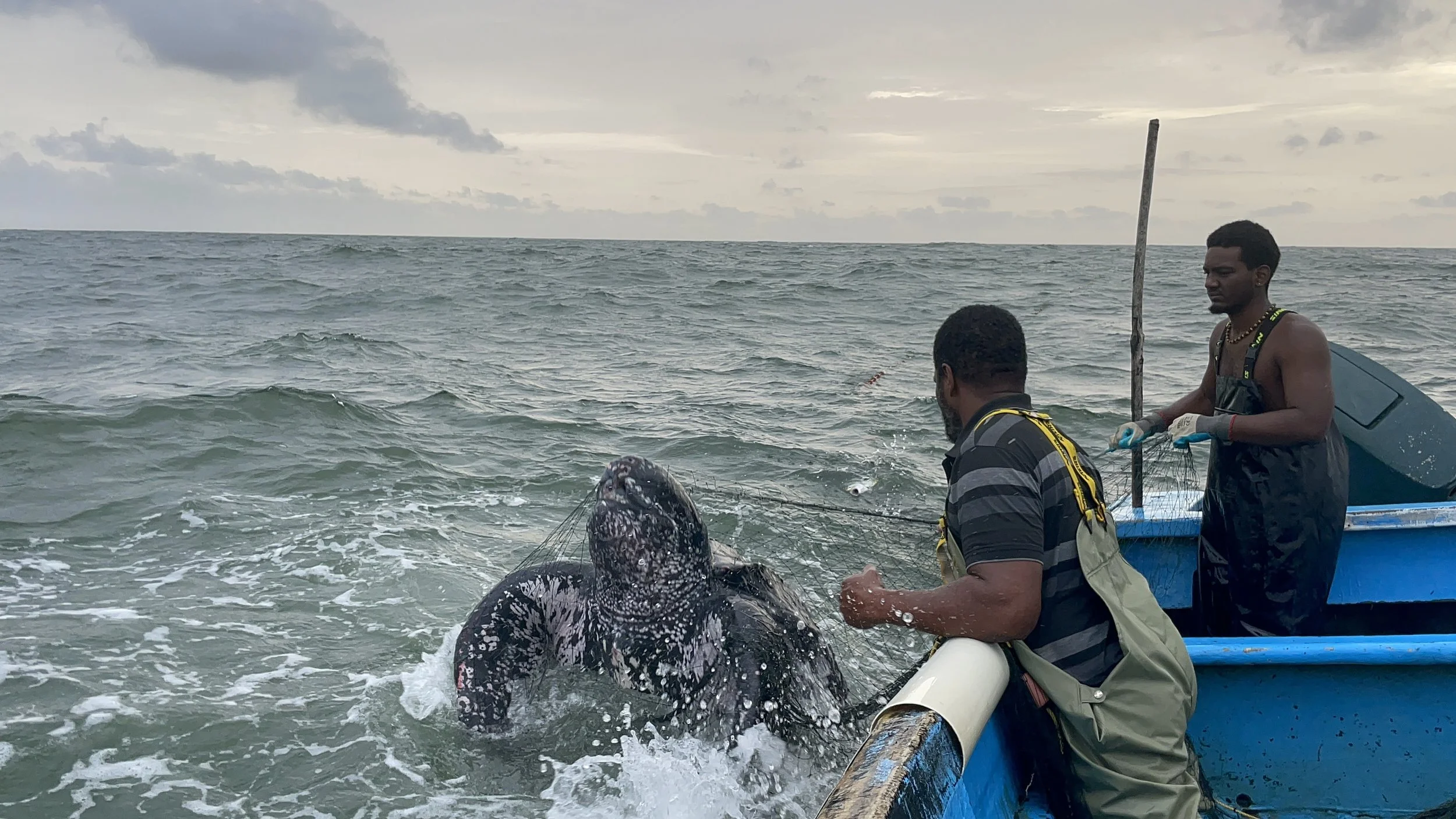
Trinidad hosts one of the largest leatherback nesting populations in the world, with major nesting beaches along the island's north and east coasts. However, high numbers of leatherbacks are caught in artisanal gillnets set close to these nesting beaches, where turtles gather during the nesting season.
Gillnet fisheries are an important source of food and income for coastal communities, so solutions to bycatch must work for fishers as well as for turtles. Net illumination using small lights has shown promise in reducing sea turtle bycatch in other parts of the world, but it needed to be tested under local conditions.
With support from the SWOT grant, Teal Guetschow worked with local fishers in Trinidad and Tobago to evaluate LED net lights as a bycatch-reduction tool in artisanal gillnet fisheries. The project tested whether illuminating nets could reduce leatherback bycatch while maintaining fishers' catch of target species. By working directly with fishers, the project built practical knowledge about a tool that could reduce bycatch near some of the Atlantic's most important leatherback nesting beaches.
Teal Guetschow (2025)
Previous
Previous
Turtle Foundation (Fundação Tartaruga) (2025)
Next
Next