
The coast of Tamaulipas, Mexico, and southern Texas, USA, encompasses the primary nesting range of the Kemp's ridley, the world's most endangered sea turtle. The species has made a partial recovery from near extinction thanks to decades of binational conservation, but its future still depends on careful protection of its nesting beaches and coastal habitats.
Long-term biological monitoring is key to tracking the species' recovery, detecting emerging threats, and understanding the health of the habitats Kemp's ridleys depend on. Consistent data across both sides of the border is especially valuable for a species shared between Mexico and the United States.
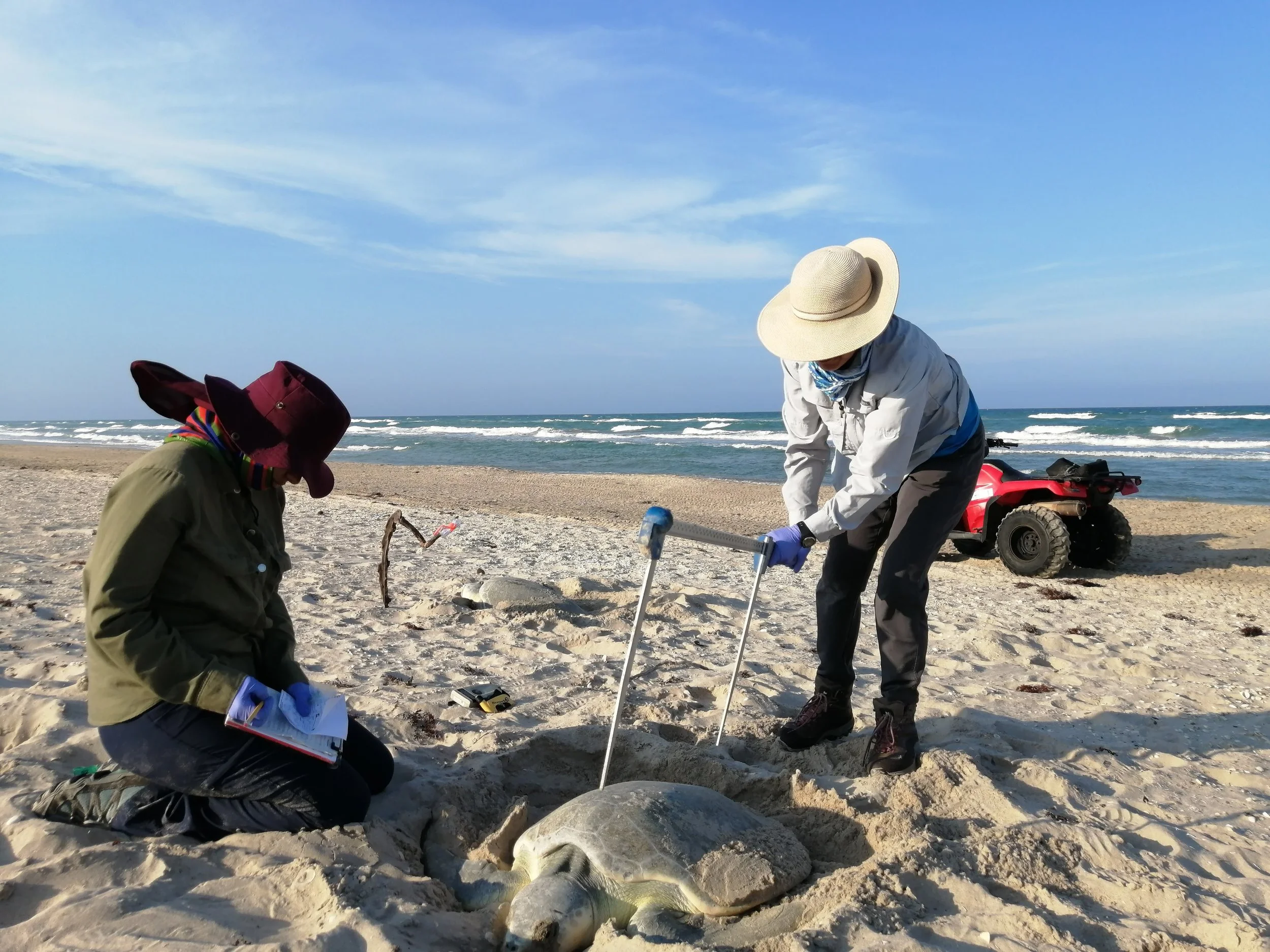
With support from the AZA-SAFE/SWOT grant, Irlanda Esmeralda Gallardo Alanis, through George Mason University, expanded long-term biological monitoring of Kemp's ridley turtles, as well as hawksbills, in Tamaulipas and southern Texas. The project strengthened data collection on these species and their habitats and helped draw greater conservation attention to the region.
Irlanda Esmeralda Gallardo Alanis (George Mason University) (2025)
Previous
Previous
Mildred Alpizar Quezada (Instituto Politécnico Nacional) (2025)
Next
Next