
Olive Ridley Sea Turtle
In one of nature's greatest spectacles, olive ridley sea turtles come ashore by the thousands to nest, a phenomenon known as an arribada, from the Spanish word for ‘arrival.’ Though they are the most abundant sea turtle species, olive ridleys are increasingly endangered by threats like trawling and coastal development.

Olive ridley SCIENTIFIC NAME
Lepidochelys olivacea
How threatened are olive ridleys?
Vulnerable
Threats to olive ridley sea turtles
Olive ridleys face numerous threats, most of them related to human activities. These threats include:
Fisheries Interactions - Bycatch, or the accidental capture, of olive ridleys in fishing nets and lines is one of the greatest threats to all species of sea turtles. Discarded fishing gear, aka “ghost gear” also continues to entangle sea turtles indefinitely as it floats in the ocean.
Pollution and Pathogens (including plastic pollution) - plastic pollution affects olive ridleys by entangling them and impeding their movement and swimming ability. Sea turtles also eat plastic, mistaking it for food, which can cause choking, intestinal damage, and blockages.
Coastal Development - developed beaches restrict the area that olive ridleys have to lay their nests and lights from buildings discourage nesting turtles and disorient hatchlings.
Climate Change - changing climate impacts the olive ridleys’ food sources, migration routes, and the development of baby turtles. Hotter, dryer sand negatively impacts the incubation of sea turtle nests and warmer nests produce more female hatchlings than males – an issue for population demographics.
Direct Take - In some places, olive ridley turtle eggs are harvested for consumption, and adults are hunted for their meat.
Olive Ridley DISTRIBUTION and maps
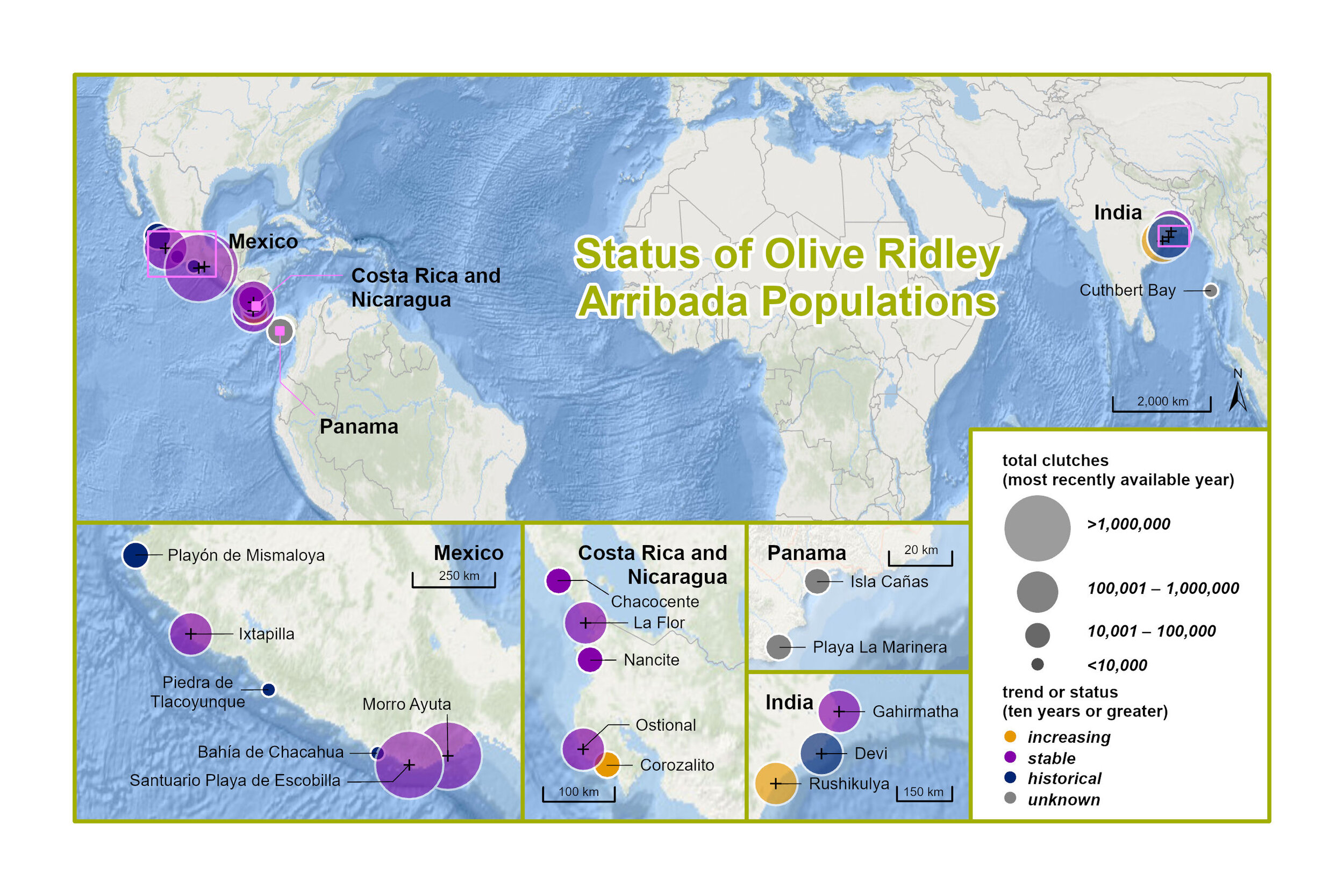
Olive ridley sea turtles are circumglobal, mostly nesting in tropical regions and sometimes migrating or foraging in temperate regions. On only a few beaches around the world, olive ridleys nest in “arribadas”, or synchronized mass nesting events, during which thousands of turtles lay their clutches over the same couple of days (see the arribada map below).

SWOT articles on olive ridleys
Olive Ridleys: The Quirky Turtles that Conquered the World (featured in SWOT Report, vol. XVI (2021))
Solving the “Ridley Riddle" (featured in SWOT Report, vol. V (2010))
Size of Olive Ridley turtles
Adult olive ridleys measure 60-70 cm long and weigh up to 70 kg
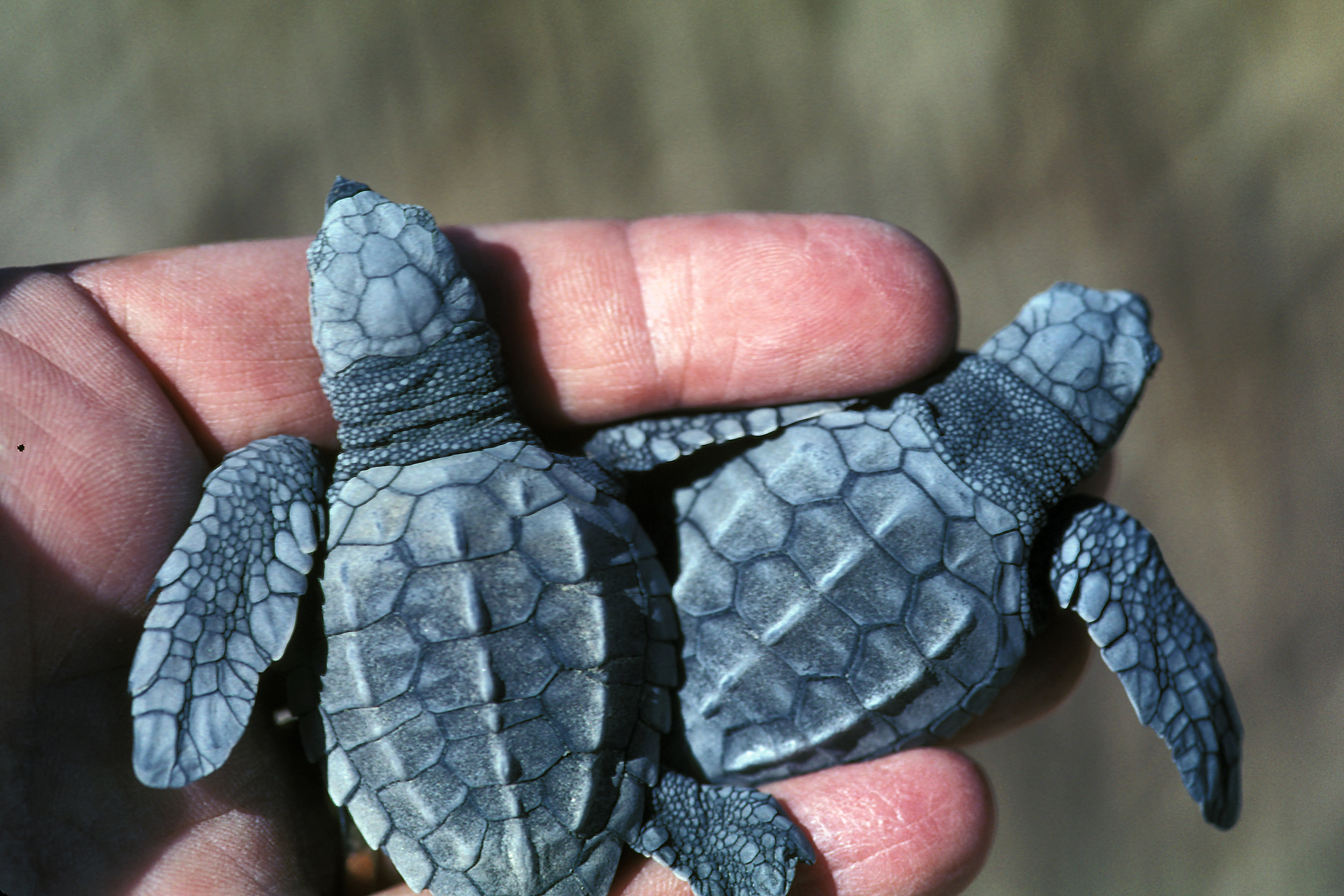
Olive ridley hatchlings are approximately 25 mm long and weigh 15-20 g
Olive Ridley’s Diet
For all life stages, olive ridleys eat mostly benthic invertebrates (crabs, other crustaceans, and mollusks) and occasionally jellies
Olive ridley Reproduction
Olive ridleys take approximately 15 years to reach sexual maturity and lay their first clutch
Olive ridleys reproduce every 1-3 years, laying 1-3 clutches of 90-130 eggs each per season. The eggs are the size of ping-pong balls and weigh approximately 30 grams each. They take around 50 days to incubate, depending on the temperature of the sand during development.
Olive ridley sea turtle Facts
Olive ridleys are thought to be the most abundant sea turtle species globally
Along with Kemp’s ridleys, olive ridleys are the only sea turtles species to exhibit synchronous mass nesting, termed arribadas. During the arribadas, the Spanish word for ‘arrivals,’ tens of thousands of female turtles nest during the same 3-7 day period once a month.
Along with Kemp’s ridleys , and, to a lesser extent, flatbacks, olive ridleys are the only sea turtle species to commonly nest during the day